
Material Flow
Closing the SMT Material Flow Loop
How SMT manufacturers can connect storage, kitting, line-side replenishment, and traceability into one reliable material flow.
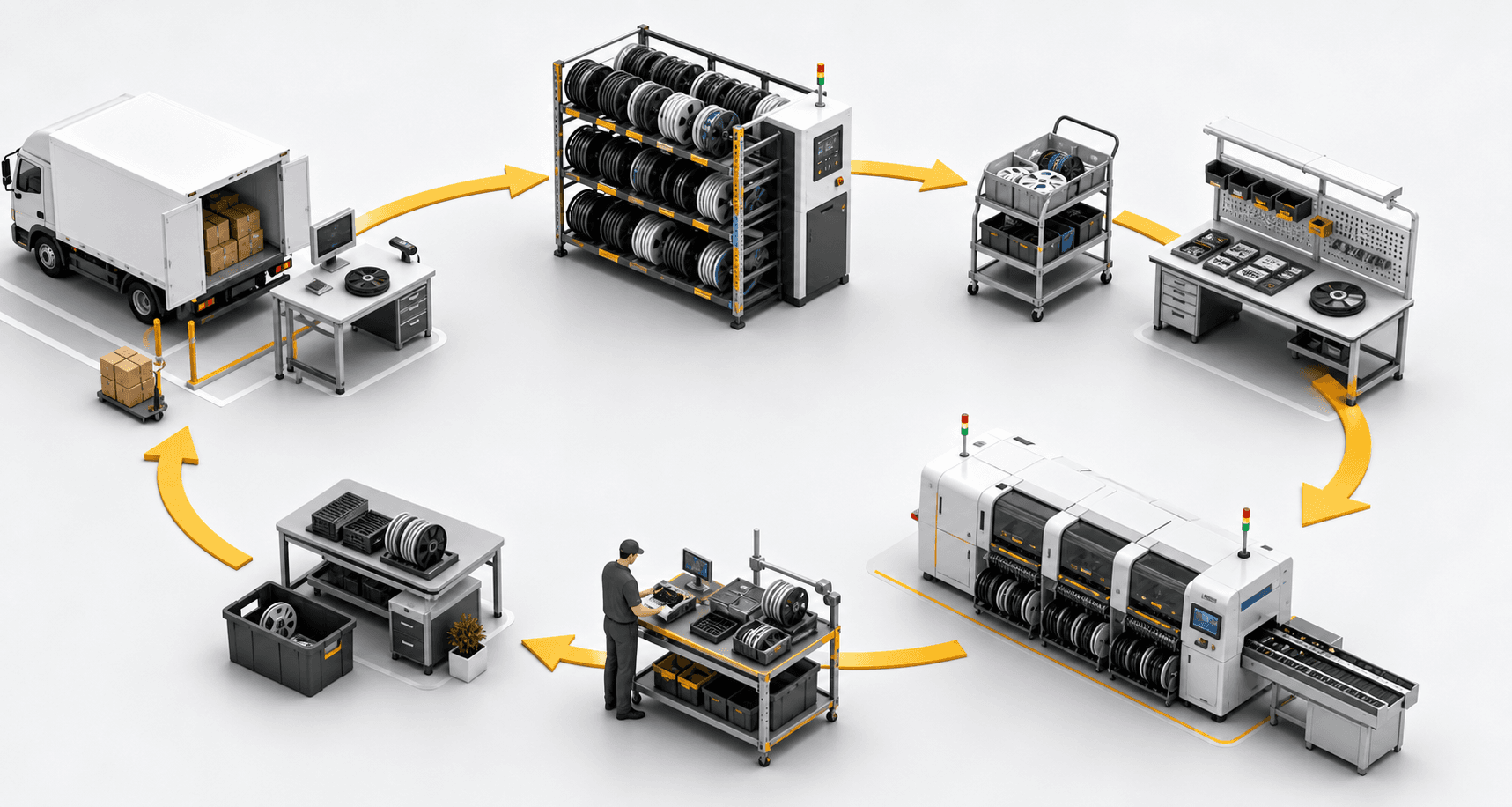
SMT factories rarely suffer from a lack of data. They suffer from disconnected events: a reel enters storage, a kit is prepared, a trolley moves, a feeder is loaded, and the ERP learns about it later.
Closing the loop means every material movement becomes a trustworthy operational signal.
Start with the physical flow
The best software model follows the path operators already understand:
- goods receipt and labeling
- controlled storage by reel, tray, box, or moisture-sensitive package
- kitting and reservation for production orders
- trolley movement to line-side zones
- consumption confirmation at the line
- return, quarantine, or replenishment
When these steps are tracked as one flow, planners stop guessing where materials are and operators stop resolving shortages manually.
Make location changes automatic
Manual scanning is useful at boundaries, but it should not be the only source of truth. Smart shelving, smart carts, and line-side checkpoints reduce the number of actions operators must remember.
The goal is not to add technology for its own sake. The goal is to make the correct inventory state the default outcome of normal work.
Treat traceability as an operating system
Traceability should answer more than audit questions. It should help teams understand which materials are available, which are reserved, which are exposed to handling constraints, and which are already committed to the next changeover.
That creates a practical digital contour around production: every material has a state, a location, and a next action.
Build for exception handling
High-performing lines still have surprises: missing reels, wrong locations, urgent swaps, expired MSD timers, or emergency replenishment. A closed material flow should surface these exceptions early and direct the next best action.
That is where the most measurable value appears: fewer line stops, fewer manual searches, and more predictable changeovers.
Talk to YAGA
Ready to discuss a smarter SMD material flow?
Share your storage, kitting, or line-side replenishment challenge and we will help shape a practical pilot.