
Smart Storage
Smart Storage Is Production Infrastructure
Why automated storage status, reservation logic, and operator-friendly replenishment matter as much as line equipment in modern SMT operations.
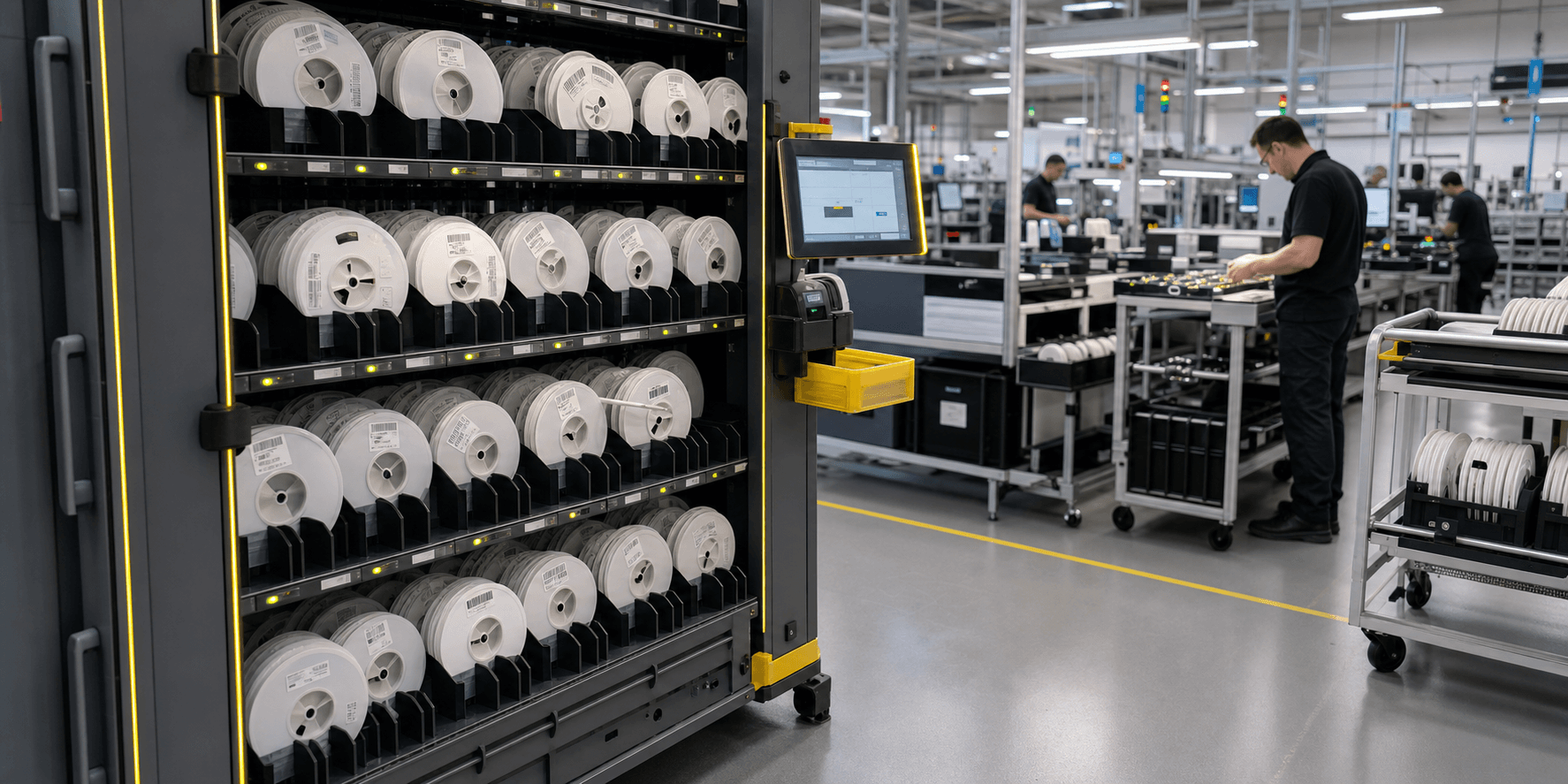
In SMT manufacturing, storage is often treated as a warehouse problem. In practice, it is production infrastructure.
Every reel that cannot be found, every component that is reserved too late, and every trolley that arrives with incomplete material becomes a production risk.
Storage must understand production intent
Smart storage is not just a location database. It should know which materials are free, which are reserved for an order, which require environmental control, and which are moving toward a line.
That context lets the system guide operators to the right action instead of only recording what happened after the fact.
Replenishment should be visible before it becomes urgent
Line-side replenishment is easiest when the next shortage is known early. Smart storage can connect available inventory with work orders, feeder demand, and trolley capacity so the team sees upcoming needs before a line call.
The result is a calmer operation: fewer escalations, fewer searches, and less dependency on informal knowledge.
Operators need clear signals
Impressive systems fail when they ask operators to interpret too much. The strongest smart storage workflows use simple signals: pick here, place here, move this trolley, verify this exception.
That clarity protects data quality because the right physical action produces the right digital event.
Talk to YAGA
Ready to discuss a smarter SMD material flow?
Share your storage, kitting, or line-side replenishment challenge and we will help shape a practical pilot.