
Traceability
Organic Traceability for Electronics Manufacturing
A practical framework for building traceability that improves daily operations instead of existing only for audits.
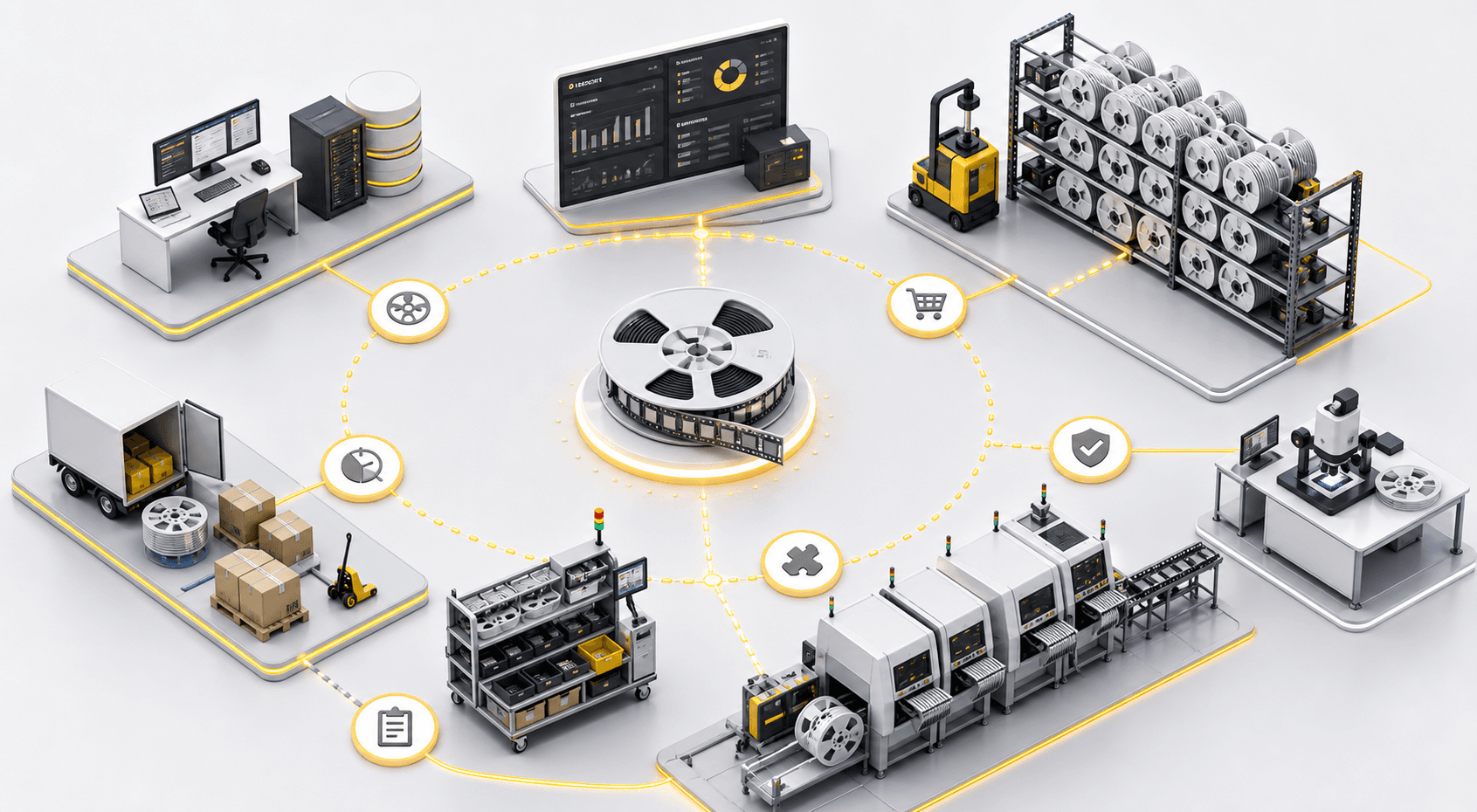
Traceability is strongest when it grows out of the real operating model. If it exists only as a compliance layer, teams experience it as extra work.
Organic traceability means the data trail is created by the same events that help production run better.
Capture useful events
Every traceability event should answer an operational question:
- Where is this material now?
- Is it available, reserved, exposed, consumed, returned, or blocked?
- Which production order depends on it?
- Who needs to act next?
When the event model supports daily decisions, data quality improves because people see the value immediately.
Connect systems without hiding reality
ERP, MES, storage, and line equipment all hold part of the truth. A useful traceability model connects them while preserving the physical state on the floor.
The best integration strategy is explicit about ownership: ERP owns master data and procurement context, MES owns production execution, and the material flow layer owns movement, location, and readiness.
Measure operational outcomes
Traceability programs should be measured by more than record completeness. Track line stoppages caused by missing materials, time spent searching, kit readiness, replenishment lead time, and exception resolution speed.
Those metrics show whether traceability is improving the factory, not just documenting it.
Talk to YAGA
Ready to discuss a smarter SMD material flow?
Share your storage, kitting, or line-side replenishment challenge and we will help shape a practical pilot.