
Smart Storage
Smart SMD Storage Without Tower-Level Cost: A Practical Alternative for EMS Manufacturers
For EMS companies that need reel-level traceability and guided picking without the cost of an automated SMD tower, smart operator-guided storage offers a practical alternative.
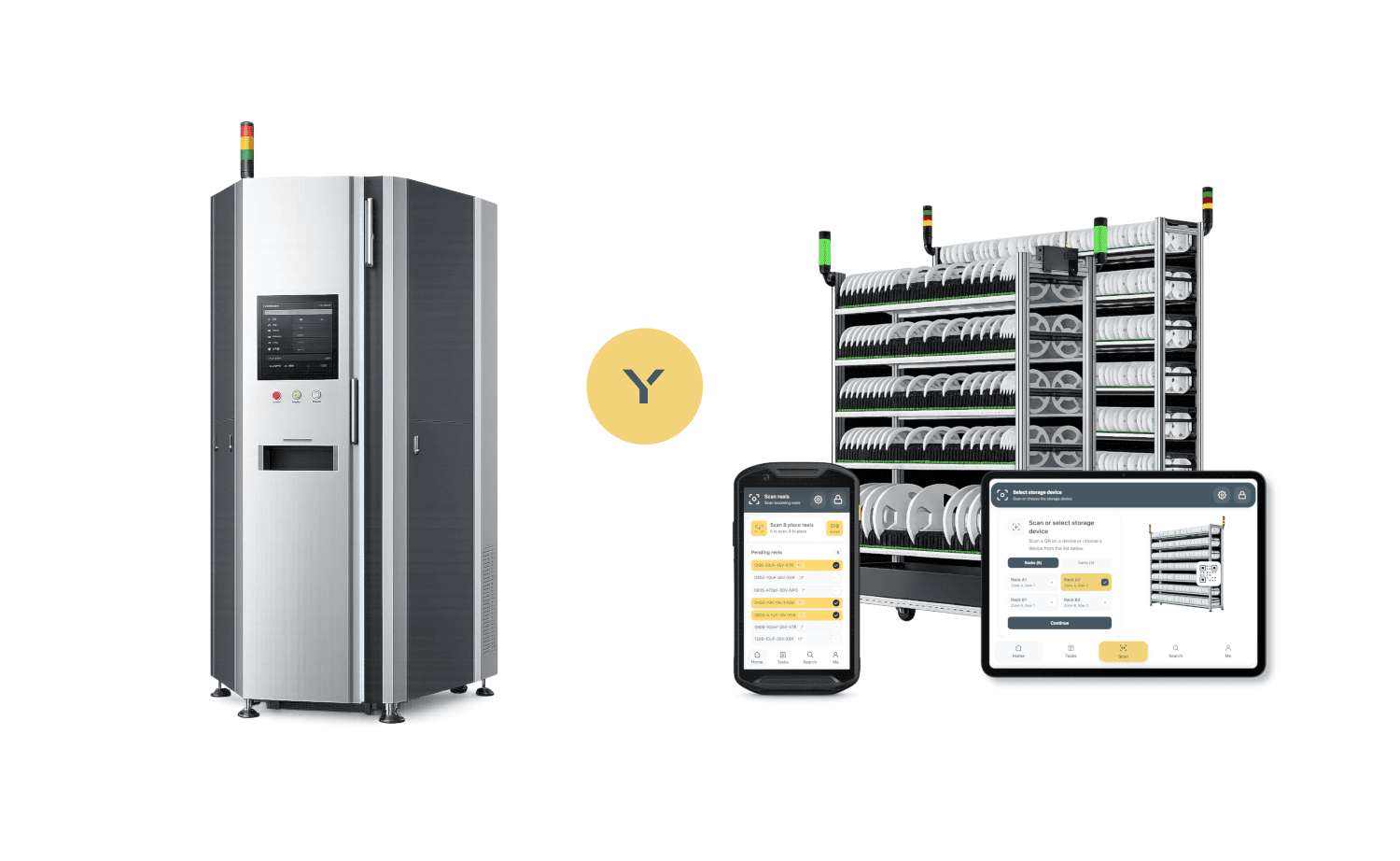
For many EMS companies, SMD material handling is still one of the daily bottlenecks between warehouse and production. Reels may be stored in different areas, operators may spend time searching for the right component, and production lines may wait while materials are being located, checked, and delivered.
Automated SMD towers solve part of this problem very well. They provide controlled storage, automatic reel retrieval, inventory visibility, and traceability. For large factories with centralized material flow and sufficient automation budget, this can be the right solution.
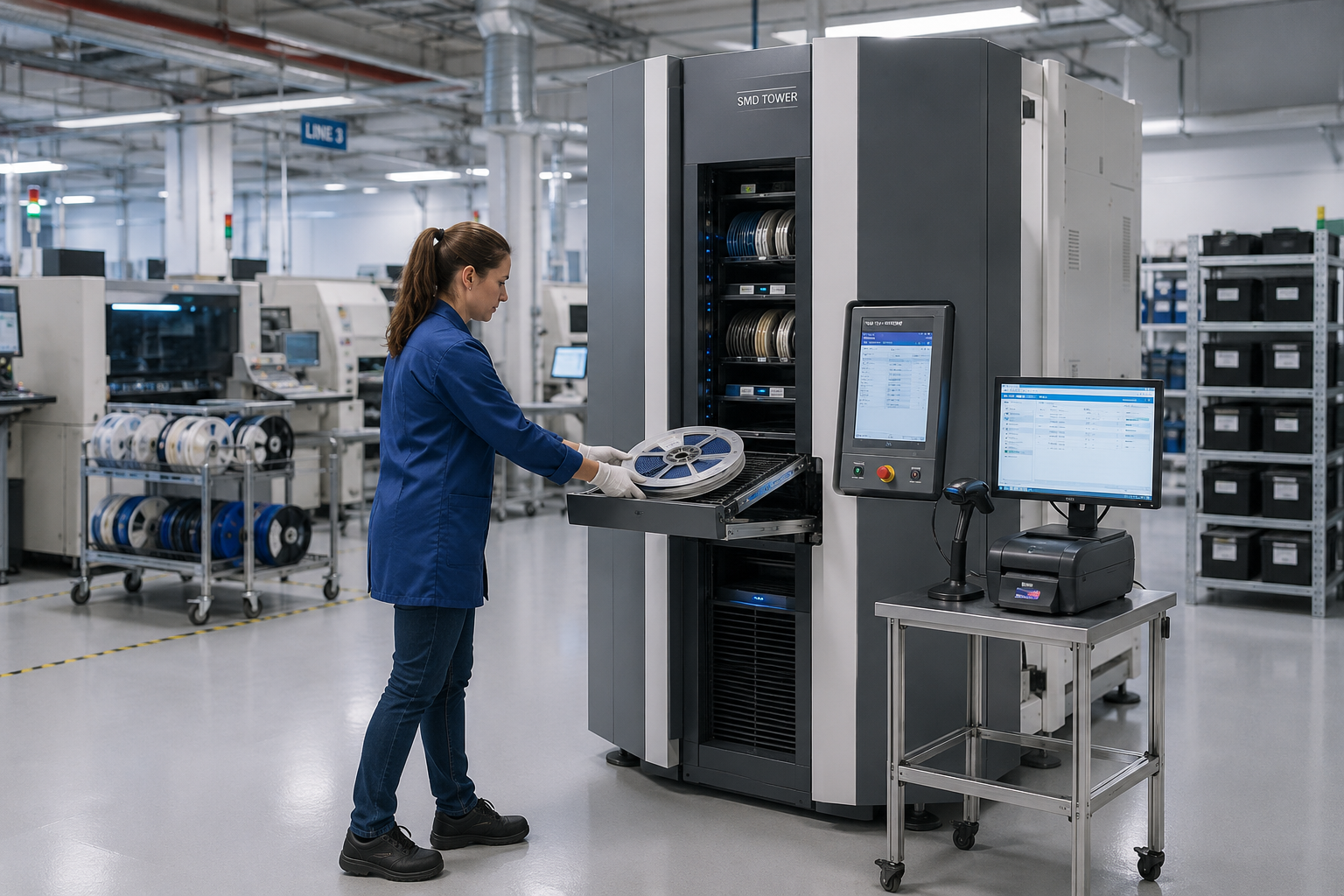
Automated SMD towers provide controlled retrieval and inventory management, but require significant investment and centralized infrastructure.
But not every EMS factory needs — or can justify — a fully automated SMD tower.
In many cases, the main problem is not the absence of robotics. The real problem is simpler and more practical:
The team needs to know exactly where the reel is, pick it quickly, confirm the movement, and keep full traceability from storage to the assembly line.
This is where smart operator-guided SMD storage becomes a strong alternative.
The problem: Operators should not search, and production should not wait
In a typical EMS environment, SMD reels move through many stages: incoming inspection, main storage, dry storage, kitting, operational storage, line-side supply, returns from production, and sometimes rework or partial reel handling.
When this process is managed manually, several problems appear:
- Operators lose time searching for reels.
- Materials may be stored in the wrong location.
- Urgent line requests interrupt normal warehouse work.
- Traceability depends too much on manual discipline.
- Production teams may not know whether the required reel is available, reserved, already picked, or physically moved.
- Wrong picks can create delays, rework, or quality risks.
Traditional racks are inexpensive and flexible, but they do not provide enough digital control. Automated SMD towers provide strong control, but they may be too expensive or too centralized for many factories.
YAGA is designed to fit between these two extremes.
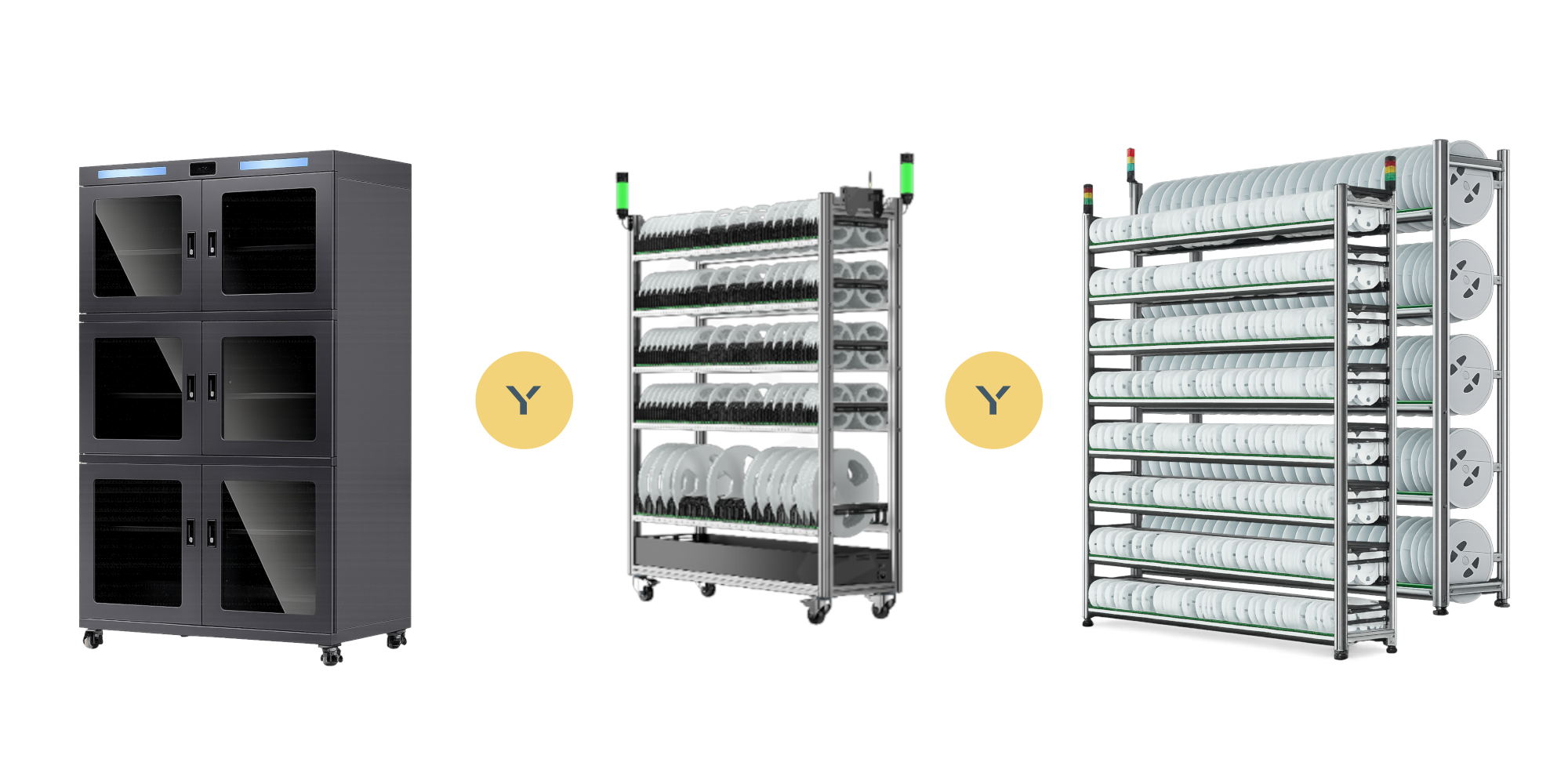
Smart operator-guided storage does not automate the hand. It automates the decision, the guidance, and the traceability — so the operator goes straight to the correct reel.
What is smart operator-guided SMD storage?
Smart operator-guided SMD storage combines physical racks, sensors, pick-to-light indication, barcode scanning, and software.
Instead of asking the operator to search manually, the system tells the operator where to go. The required reel position lights up. The operator picks the reel, confirms the action, and the software records the movement.
The idea is simple:
The operator still performs the physical pick, but the system removes guessing, searching, and manual tracking.
For SMD materials, this concept becomes even more valuable because the "item" is not just a box in a warehouse. It is a production-critical component reel, often connected to a specific order, machine, feeder setup, lot, or traceability requirement.
YAGA as an alternative to SMD towers
YAGA should not be seen as a cheap shelf. It is also not trying to replace every use case of a fully automated SMD tower.
A better way to describe it is:
YAGA is a smart, operator-guided SMD storage system that gives EMS teams tower-like visibility and traceability, while keeping reel access fast, flexible, and affordable.
Automated towers follow the "goods-to-person" principle: the system retrieves the reel and brings it to the operator. This reduces walking and searching, and can be very effective in centralized storage environments.
YAGA follows a different principle:
The operator goes directly to the correct illuminated reel location.
For many daily production situations, this can be very practical. If the rack is located near the assembly area, operational storage, or kitting zone, the operator does not need to wait for mechanical retrieval from a centralized tower. The system shows the exact reel, the operator picks it, and the material can move immediately toward production.
This is especially useful for:
- urgent line replenishment
- operational storage near SMT lines
- kitting preparation
- partial reel returns
- multiple production zones
- factories that want traceability but do not want a large automation project
- EMS companies that need gradual digitalization rather than one large investment
The key difference: full automation vs assisted speed
The question is not simply "tower or rack?"
The better question is:
How much automation does this factory really need to solve the material-flow problem?
For some companies, a fully automated SMD tower is the right answer. For others, the main value comes from knowing where every reel is, guiding the operator to the right location, confirming the pick, and updating the inventory in real time.
That is the space where YAGA is strongest.
| Requirement | Traditional rack | YAGA smart rack | SMD tower |
|---|---|---|---|
| Low investment | Yes | Yes | No |
| Known reel location | Manual | Yes | Yes |
| Pick-to-light guidance | No | Yes | Not usually needed |
| Automatic mechanical retrieval | No | No | Yes |
| Fast direct access | Depends on search | Yes | Depends on retrieval cycle |
| Traceability | Manual or limited | Yes | Yes |
| Flexible layout | High | High | Medium |
| Step-by-step rollout | Yes | Yes | Usually more complex |
| Best use case | Basic storage | Fast guided supply | Centralized automated storage |
The most important point is this:
YAGA does not automate the hand. It automates the decision, the guidance, and the traceability.
The operator does not need to think where the reel is. The system already knows. The operator does not need to search. The light shows the correct position. The team does not need to manually reconstruct what happened later. The software records the movement.
Why this can be faster in real EMS operations
A tower may be very efficient in controlled centralized storage. But real production flow is not always centralized and predictable.
EMS teams often deal with urgent requests, small batches, engineering changes, partial reels, alternative components, and last-minute production adjustments. In these situations, the fastest process is often not full automation. It is direct guided access.
With YAGA, the operator can:
- receive the task
- go directly to the illuminated rack position
- pick the correct reel
- scan or confirm the action
- deliver the reel to the required production area
This can remove one of the biggest hidden wastes in SMD logistics: human search time.
Lower cost does not mean lower value
One of the strongest advantages of YAGA is cost.
A fully automated SMD tower is a serious investment. It may require not only the machine itself, but also installation, workflow changes, maintenance, training, and integration work.
YAGA can offer a different path:
Start with smart racks and software. Add scanners, sensors, carts, dry storage, integrations, and additional storage areas step by step.
This makes the solution more accessible for small and mid-sized EMS companies. It also reduces the risk of implementation. The customer does not need to rebuild the whole material-flow process from day one.
Instead, they can start with the most painful area:
- reels that are frequently searched for
- operational storage near the line
- kitting preparation
- high-value components
- materials with strict traceability requirements
- production zones where delays are most expensive
This makes YAGA not only an affordable alternative, but also a practical first step toward smarter material flow.
Distributed smart storage: a major advantage
A tower is usually a centralized system. YAGA can be distributed.
This means smart racks can be placed where they are most useful:
- in the main SMD warehouse
- near assembly lines
- in the kitting area
- in operational storage
- near dry cabinets
- in separate production zones
- together with carts or mobile material stations
All of these locations can be connected by the same software layer.
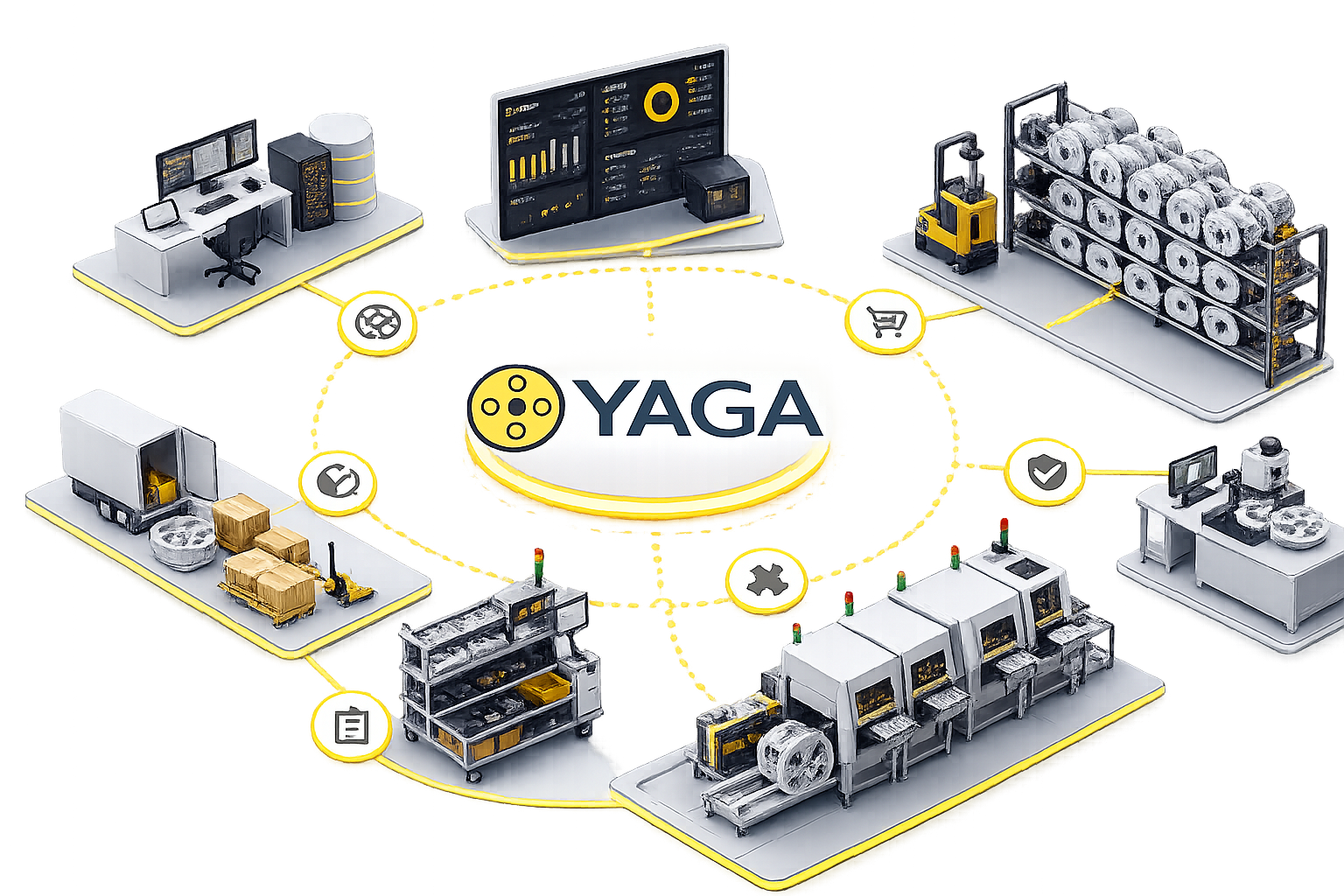
Distributed smart storage places racks where they are most useful — main warehouse, kitting area, operational storage, and line-side — all connected by the same software layer.
This is important because EMS material flow is not only about storage density. It is about movement. The real question is not only "Where can we store reels?" but also:
How quickly and reliably can we move the correct reel to the correct line at the correct time?
YAGA supports this by making storage locations visible, guided, and connected.
When an SMD tower is still the right choice
A professional comparison should be honest. There are cases where an SMD tower may be the better choice.
For example, an SMD tower can make sense when the factory needs:
- very high-density centralized reel storage
- automatic mechanical retrieval
- controlled access to a large number of reels
- a mature automation environment
- enough volume to justify the investment
- a standardized material-flow process
YAGA is not trying to say that towers are unnecessary. The point is different:
Many EMS companies need smart material control before they need robotic material retrieval.
For those companies, YAGA can deliver the practical benefits that matter most: faster finding, fewer mistakes, better traceability, and lower implementation cost.
The practical message for EMS companies
If your team is losing time searching for reels, if operators depend on manual lists, or if production often asks "Where is this material?", then a full SMD tower may not be the only answer.
A smart pick-to-light rack system can solve the first and most painful layer of the problem:
- know every reel location
- guide operators to the right position
- confirm material movements
- support traceability
- reduce line waiting time
- scale gradually across storage and production areas
This is the practical value of YAGA.
Conclusion
SMD towers are powerful systems, but they are not the only way to modernize SMD material handling.
For many EMS companies, the best next step is a more flexible and affordable solution: smart SMD reel racks with pick-to-light guidance, sensors, and software-based traceability.
YAGA gives production and warehouse teams a simple promise:
When the line needs a reel, the operator should not search — and should not wait. The system should show exactly where to go.
That is the value of smart operator-guided SMD storage.
It brings the most important benefits of digital SMD material management — location control, guided picking, traceability, and faster line supply — without requiring tower-level investment or a complex automation project from day one.
Ready to modernize your SMD storage without tower-level cost?
YAGA helps SMT and EMS manufacturers connect smart racks, pick-to-light guidance, and material-flow software into one practical storage platform.
Talk to YAGA
Ready to discuss a smarter SMD material flow?
Share your storage, kitting, or line-side replenishment challenge and we will help shape a practical pilot.